Cash vs. Accrual Accounting: Which Method is Right for Your Business?
When it comes to managing your business finances, understanding the difference between cash basis and accrual basis accounting is essential. The main difference comes down to timing—specifically, when revenue and expenses are recorded.
Cash Basis Accounting
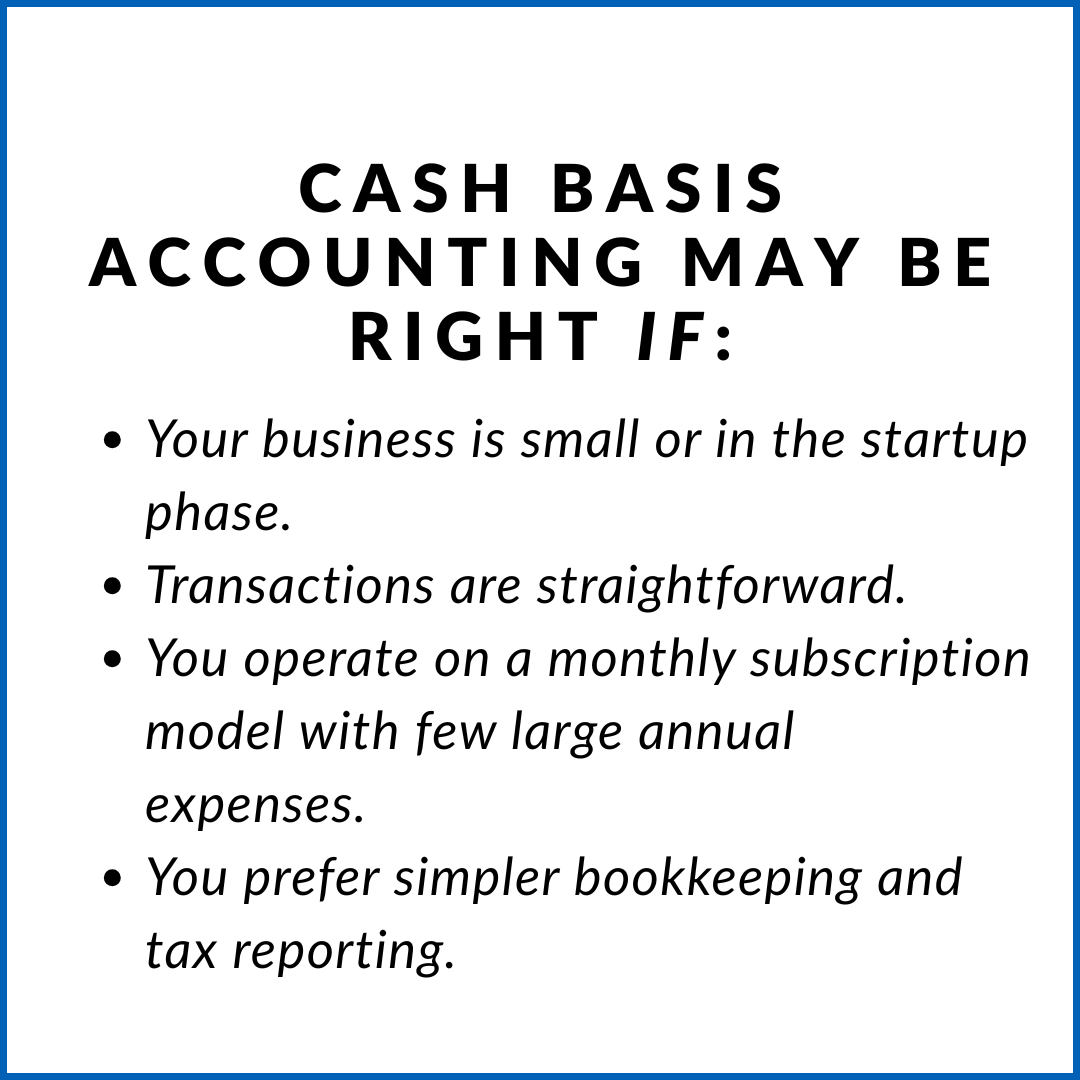
Cash basis accounting records revenue when cash is received and expenses when cash is paid. It's a straightforward method that focuses on money coming in and going out, making it a popular choice for small businesses and startups.
One of the biggest advantages of cash basis accounting is its simplicity. There’s no need to track deferred revenue or prepaid expenses, making bookkeeping easier to manage. If your business has straightforward transactions and limited annual expenses, cash basis accounting may be a practical option.
For example, a subscription-based business with monthly customer payments and minimal long-term expenses can often operate effectively on a cash basis. Since many tax returns are also filed using the cash method, tax reporting can be simpler as well.
Accrual Basis Accounting
Accrual basis accounting records revenue when it is earned and expenses when they are incurred, regardless of when cash changes hands. This approach provides a more accurate picture of your business's financial performance by matching revenue with the expenses required to generate it.
For example, if you invoice a client $12,000 for a year-long service contract, accrual accounting recognizes $1,000 of revenue each month rather than recording the entire amount when payment is received.
The same applies to annual expenses like insurance. Instead of recording the full premium in one month, accrual accounting spreads the expense over the coverage period, creating more accurate monthly financial statements.
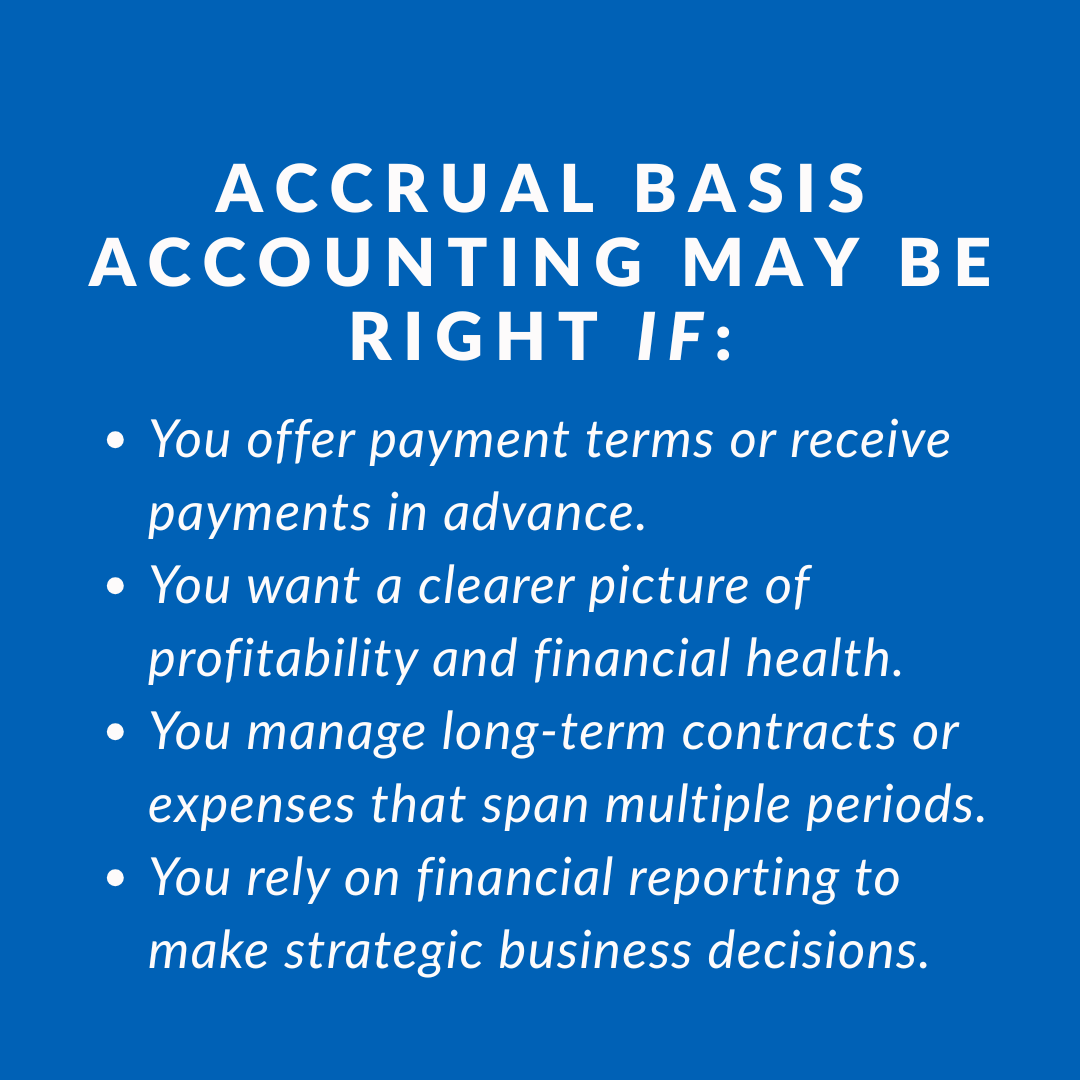
If you expect your business to grow and become more complex, starting with accrual accounting can be beneficial. While cash basis accounting is simpler, transitioning to accrual accounting later can be costly and may disrupt reporting consistency.
Final Take-Aways
Both accounting methods have their advantages. Cash basis accounting offers simplicity and ease of use, while accrual accounting provides a more complete view of your financial position. The right choice depends on your business model, financial complexity, and long-term goals. Understanding the differences will help you make informed decisions and build a stronger financial foundation for your business.